
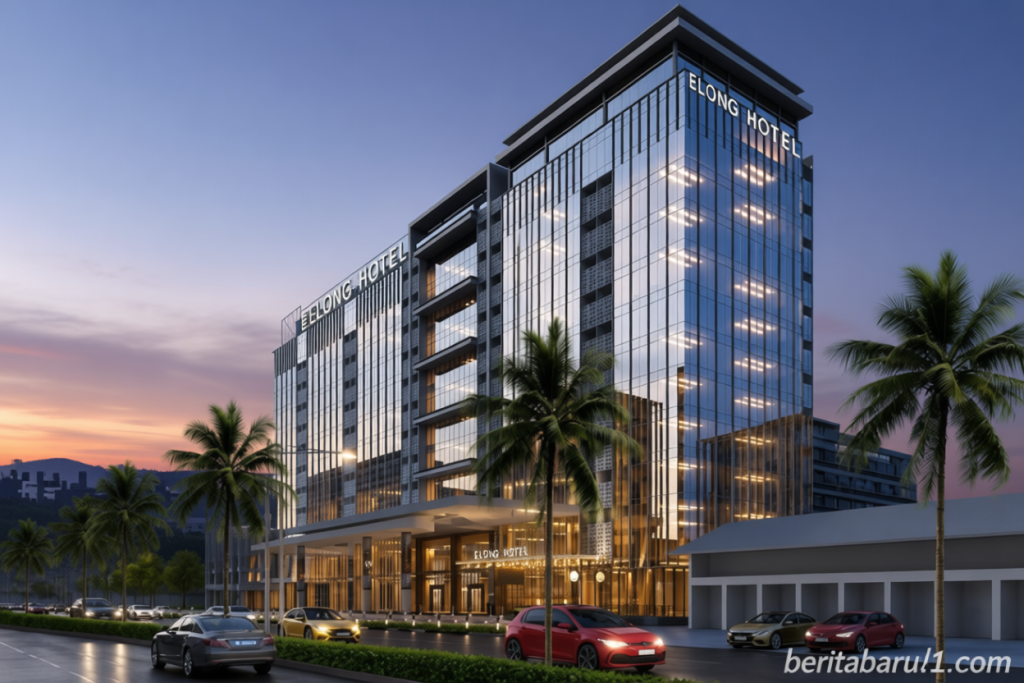
New Policy: Chinese Smart Hotel Tech Expands to Indonesia
Beritabaru1.com – Under the new policy, Indonesia’s tourism and hospitality sector has become a focal point for innovative global players. Elong Hotel Technology, a Chinese-based company specializing in smart hotel solutions, has announced its regional expansion in Jakarta through a strategic event titled “Go Indonesia, Win Together.” This move is part of the company’s broader “Eco-Going Global” initiative, which aligns with the new policy’s emphasis on sustainable and tech-driven growth in the hospitality industry. The event, held on May 13, 2026, marks Elong’s entry into the Indonesian market, following successful ventures in Thailand and Malaysia.
Market Trends and Strategic Entry
According to the latest data from the Indonesian Central Bureau of Statistics (BPS), the country welcomed 1.41 million international tourists in December 2025, reflecting a 14.43% year-on-year increase. Simultaneously, national hotel occupancy rates rose to 56.12%, while the total number of hotel accommodations reached 34,702 units. These figures underscore the growing demand for modernized hospitality services, creating a ripe opportunity for Elong’s new policy to drive transformative changes in the sector.
The company’s decision to expand into Indonesia is rooted in the new policy’s vision to boost infrastructure development and digital integration. Elong’s smart hotel technologies, which combine automation and artificial intelligence, are designed to address key challenges in the industry, such as operational inefficiencies and rising costs. By introducing these solutions, Elong aims to align with Indonesia’s strategic goals of modernizing its tourism sector and enhancing guest experiences through innovation.
Global Expansion and Integrated Solutions
Xi Dandan, CEO of Elong Hotel Technology, highlighted the new policy’s role in guiding the company’s global expansion. “Our expansion into Indonesia is a natural progression under the new policy, which emphasizes the importance of an integrated ecosystem for hospitality businesses,” he stated. The strategy involves a five-in-one approach, offering comprehensive support in brand management, operational systems, digital tools, supply chain logistics, and financial connectivity.
This integrated model is intended to streamline business processes and reduce overhead costs. The new policy also encourages cross-border collaboration, which Elong is leveraging to establish partnerships with local stakeholders. By adapting its technology to regional needs, the company aims to create scalable solutions that align with Indonesia’s evolving market dynamics and regulatory framework.
Smart Technologies and Operational Innovations
At the Jakarta launch, Elong unveiled its smart hotel technologies, which include AI-powered service robots, automated booking systems, and modular prefabricated construction methods. These innovations are said to accelerate hotel development while maintaining high standards of quality and sustainability. The new policy supports such advancements by prioritizing digital transformation, ensuring that Elong’s offerings meet the growing demand for efficiency and convenience in the hospitality sector.
The company’s smart hotel solutions also focus on energy management and customer engagement. For instance, AI-driven analytics help optimize resource allocation, while voice-activated services enhance guest satisfaction. By implementing these technologies, Elong’s new policy not only addresses immediate operational needs but also positions the company as a leader in the next phase of the industry’s evolution.
Case Study: Elong Hotel Jakarta PIK
As a flagship example of the new policy’s application, Elong Hotel Jakarta PIK has demonstrated remarkable success. The hotel achieved a 93% occupancy rate in 2025, with a RevPAR (Revenue Per Available Room) surpassing Rp1.3 million. This performance is attributed to the new policy’s focus on tapping into emerging business hubs like Pantai Indah Kapuk (PIK), which has become a key destination for both leisure and corporate travelers.
The new policy also emphasizes the importance of location-specific strategies. Elong’s Jakarta PIK project showcases how tailored smart technologies can cater to diverse market needs, from luxury stays to budget accommodations. By aligning with local trends and infrastructure developments, the company ensures that its expansion not only meets current demands but also anticipates future growth trajectories.
Logistical Support and Regional Partnerships
Under the new policy, Elong has partnered with Zhiyi Technology to establish an overseas warehouse in Southeast Asia. This logistical infrastructure strengthens regional supply chains, enabling faster distribution of hotel room inventory and efficient cross-border procurement. The new policy also encourages collaboration between international firms and local suppliers, which is critical for scaling smart hotel solutions across Indonesia’s vast and diverse geography.
Such partnerships are essential for ensuring that the new policy’s objectives are met. By creating a localized supply chain, Elong reduces dependency on foreign imports and supports the growth of domestic businesses. This approach not only lowers operational costs but also promotes the adoption of smart technologies in line with Indonesia’s digital economy priorities.
Future Outlook and Policy Implications
Looking ahead, Jakarta is expected to serve as the regional hub for Elong’s expansion under the new policy. The company plans to extend its network to major tourist destinations across Indonesia, utilizing an asset-light model to maximize scalability. This strategy aligns with the new policy’s emphasis on sustainable and efficient growth, ensuring that smart hotel technologies can be deployed without overwhelming existing resources.
The new policy’s impact extends beyond Elong’s expansion. It signals a shift toward digitalization in Indonesia’s hospitality sector, encouraging other international firms to invest in similar innovations. As the industry embraces these changes, the focus keyword “new policy” becomes a central theme in shaping the future of hotel operations and customer experiences in the region.